The equipment list for a new restaurant is not a shopping list, it is a sequence. Buy in the wrong order and money sits idle in a machine that runs twice a week while the station that decides your service speed is undersized. What follows is grouped the way a kitchen actually comes together: the things that cannot open without, the things that arrive once the menu settles, and the things that only earn their place at a certain number of covers.
Two rules run through all of it. Size by output, never by floor space, and confirm the electrical supply before anything is ordered. Both are covered in more detail further down.
What a kitchen cannot open without
Cooking
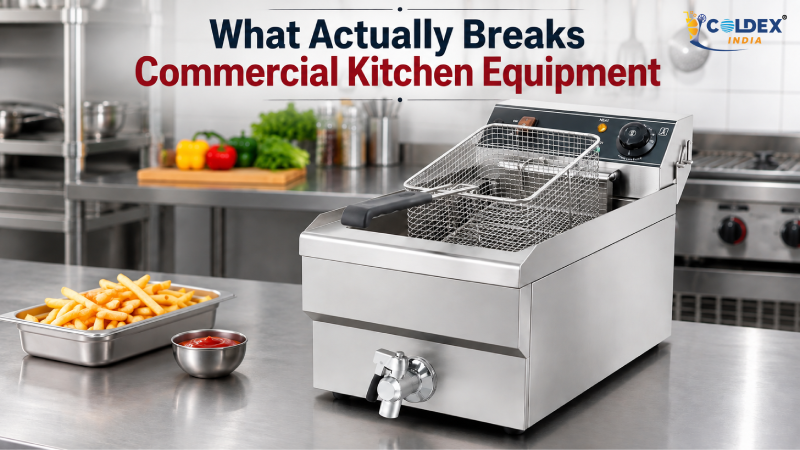
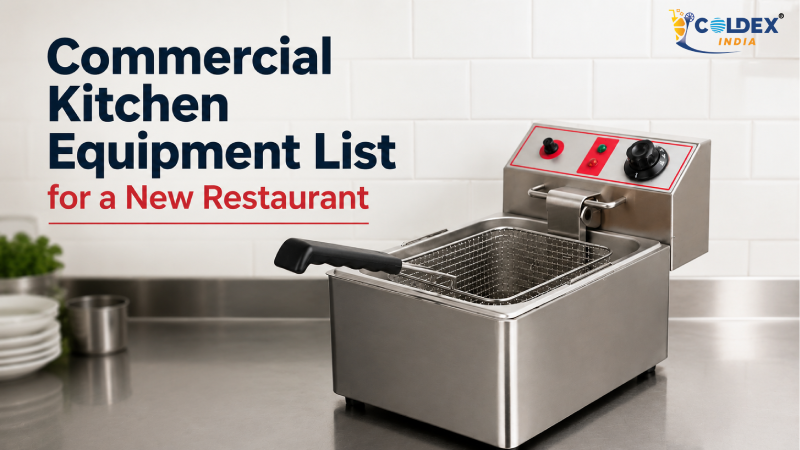
Whatever your menu is built on comes first, and it is the one place not to economise. For a menu with fried items that means a commercial deep fryer, and the litre figure decides two things: how much goes in at once, and how quickly the oil recovers temperature after cold food hits it. Recovery is the part people miss. An undersized fryer drops temperature, the food absorbs oil instead of sealing, and the result is greasy rather than crisp. A snack counter running one product manages on 6 to 10 litres; a restaurant frying through a full service is better on 13 litres, or a standing 28 litre unit that holds temperature all evening.
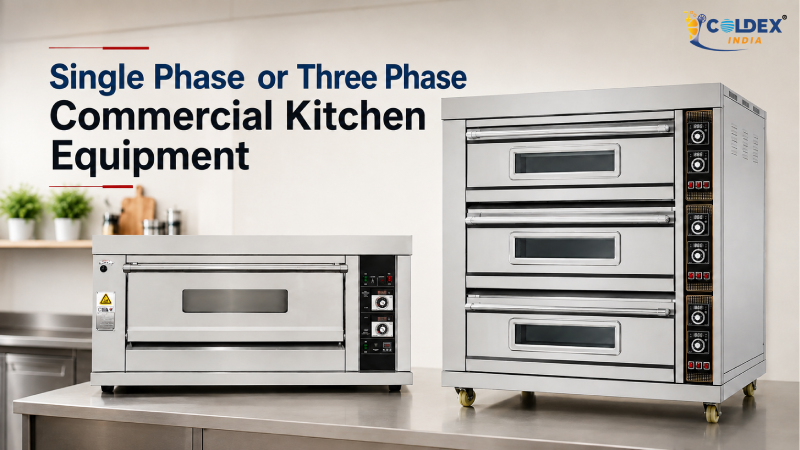
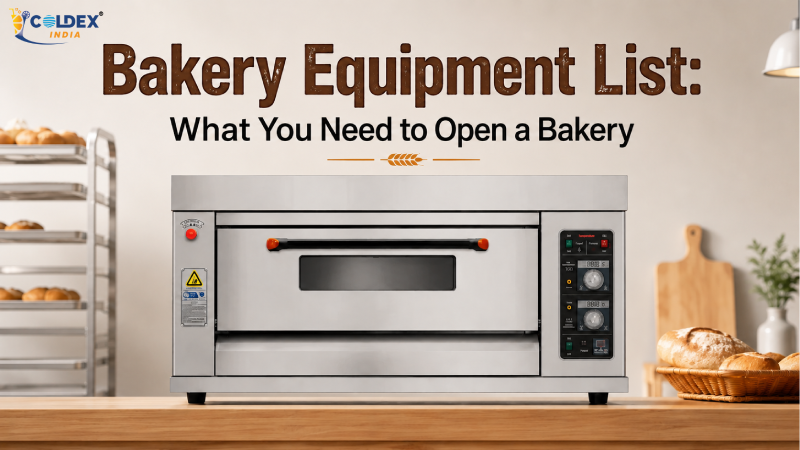
For a menu built on baked items, a baking oven is sized on trays per bake rather than on anything else. Electric deck ovens run from 3.2 KW for a single deck holding one tray up to 19.6 KW for three decks holding six. Gas versions of the same layouts draw only 100 to 300 W of electricity, because the heat comes from the burner and the power is for the controls.
If pizza is on the menu at all, it wants its own oven with a stone base rather than a shelf in a general oven. Stone holds heat and returns it to the base, which is the difference between a crisp bottom and a pale, bendy one. Output runs from four pizzas a batch on 2 KW up to fourteen a batch on 6.4 KW across a double deck.
Holding
Food that is ready before the ticket is called has to be held at temperature without cooking further. A food warmer is a holding machine, not a heating one: load it hot and it will hold for hours, load it cold and it will not bring food up to a safe temperature quickly. Counter-top units draw 800 W to 1.5 KW. The higher rating recovers faster every time the door opens, which matters in an open or air-conditioned front of house.
Preparation
A commercial blender is not a domestic one with a bigger badge. The difference is the motor and the duty cycle: 1200 to 2200 W against roughly 400 to 600 W on a household machine. That power is what gets through ice and frozen fruit without stalling, and what lets the machine run all afternoon without its heat protection tripping exactly when the queue is longest.
What arrives once the menu settles
The second station
A sandwich griller is usually the first addition, because a griller running back to back through one lunch hour is what decides whether the queue moves. A single plate unit takes two jumbo sandwiches on 2.2 KW in 425 mm of counter; a double jumbo plate takes four on 4.5 KW in 656 mm. Twice the output for about 230 mm more bench is nearly always the better buy for anywhere that sees a rush.
Grooved plates leave the char lines people associate with a panini. Flat plates give full contact, which browns the whole face and suits softer breads and burger buns. Decide which before ordering, because the plate is what the machine is.
Bread and buns
Toasting splits into three machine types and picking the wrong one is the usual reason a counter slows down. Pop-up toasters at 1.28 to 3.3 KW suit breakfast service and small numbers. Conveyor toasters take bread in one end and deliver it toasted at the other, so the counter never waits for a cycle, and at 1.3 to 1.92 KW they cost little more to run. A vertical bun toaster is a different machine again: it toasts the cut faces of burger buns, which is what a burger line needs and what neither of the other two can do.
Ice
An ice machine is rated in kilos per twenty-four hours, and that is the figure to buy on. A bar or a juice counter does not use ice evenly through the day; it uses most of it in a few hours. Size for the peak and let the machine catch up overnight. A counter-top bullet maker produces 10 to 12 kg a day from a 1.5 litre tank on 120 W and needs no plumbing at all. An undercounter 45 kg machine on 600 W, with a 15 to 18 minute freezing cycle, is a different class and is what a working bar needs.
What waits until the covers justify it
Everything in this last group is worth having and none of it should be bought in month one. Each one either serves a narrow part of the menu or only pays back at volume.
- Mixers once you make anything in quantity in house. Planetary machines from 7 to 40 litres handle batter, cream and icing; spiral machines from 10 to 64 litres develop bread dough without heating it. Read the max kneading figure rather than the bowl size: a 20 litre planetary is rated for 3 kg of dough while a 10 litre spiral handles 4 kg, and that gap is the whole argument between them.
- Waffle machines when a dessert line is genuinely part of the offer rather than an afterthought. Shape decides the sale, so start from what you want on the menu, not from the machine.
- Chocolate warmers for dessert counters that dip and drizzle to order. Separate pots matter more than total capacity, because dark, milk and white behave differently and should not share one.
- A dehydrator for garnish, dried fruit and anything you currently buy in. It is slow, low-power and runs overnight, which is exactly why it frees the oven for baking.
Before you order any of it
Two checks save more money than any negotiation.
Confirm the power supply first. Most counter-top equipment here runs on an ordinary 220 V single phase socket, which is why it works in rented shop units and food courts without electrical work. The larger machines do not: a three deck electric oven drawing 19.6 KW needs wiring and a sanctioned load to match, and a 28 litre fryer on 10 KW needs its circuit checked. This is the single most common reason a new machine sits unused for a week after delivery.
Measure the path in, not just the space. Counter-top units are simple. A rotary rack oven standing 1080 x 1400 x 1960 mm arrives on a lorry and has to be walked in through your doorway and turned into position. Measure the doorway, the corridor and the turning space before ordering, not after the truck arrives.