
A cloud kitchen is judged on two things a dine-in restaurant is not: how much output it gets from a small, expensive floor, and how well the food survives twenty to forty minutes in a bag on a bike. Almost every equipment decision follows from one of those two.
It also drops a whole category of purchase. There is no counter to sell from, so display equipment earns nothing. That money is better spent on the station that decides how many tickets an hour the kitchen can clear.
Output per square foot
Floor space is the constraint that never relaxes, so the question on every machine is output per millimetre of bench, not output alone.
Stack the output, not the counter
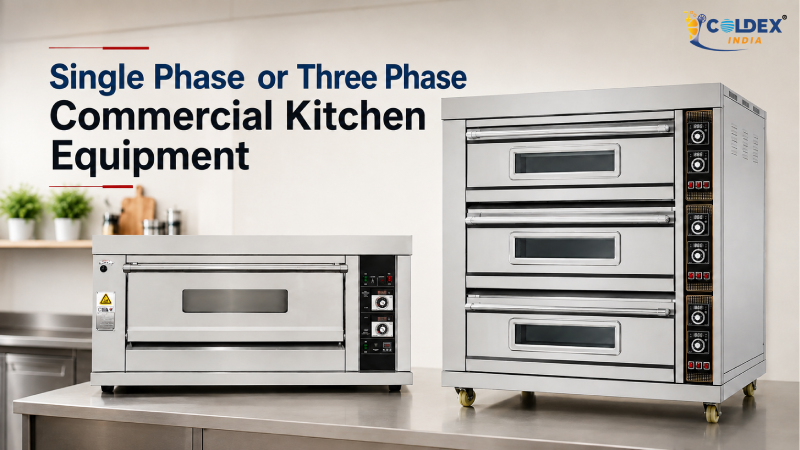
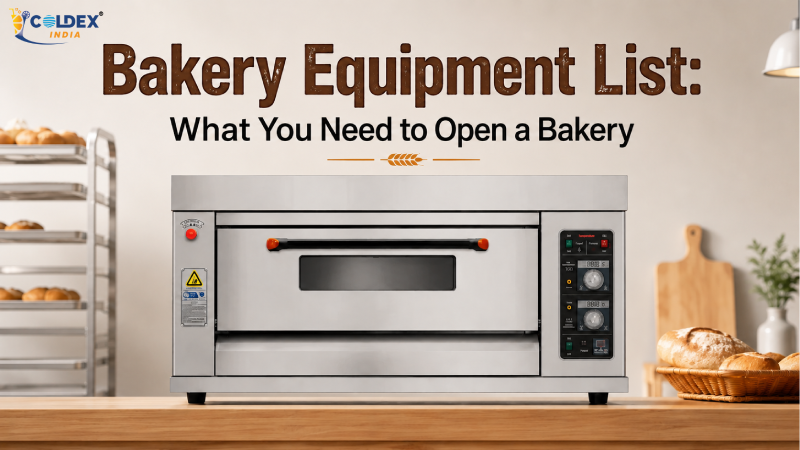
Where two machines would sit side by side in a restaurant, a delivery kitchen should look for one that doubles up in the same footprint. A double deck pizza oven stacks two chambers into 945 x 605 x 810 mm and takes fourteen pizzas a batch on 6.4 KW, against seven a batch from a single deck in the same 945 x 605 mm of floor. Two counter-top ovens side by side would take twice the bench for the same result.
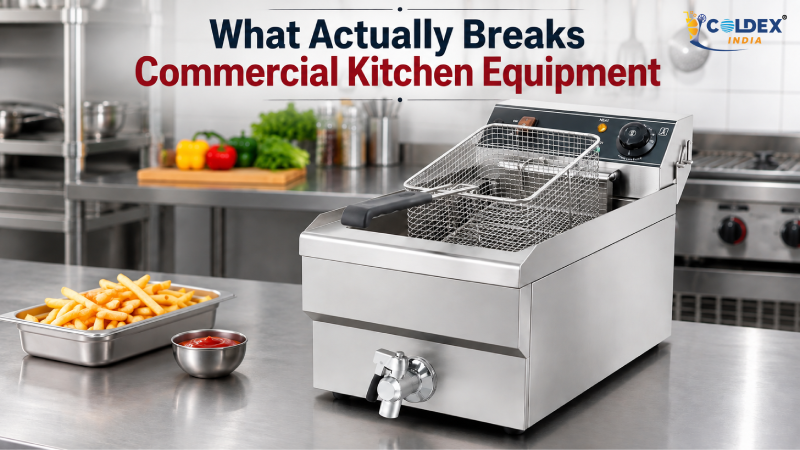
The same logic applies to fryers. A double tank unit puts two separate wells into 480 to 580 mm of counter, each with its own element. That is not only about output: it is the answer when a vegetarian item must never touch oil that has fried something else, which in an Indian delivery kitchen running multiple brands from one floor is often the whole reason for the second tank.
Counter-top wherever possible
Almost everything a delivery kitchen needs runs on an ordinary 220 V single phase socket and sits on a bench: grillers at 2.2 to 4.5 KW, toasters at 1.28 to 3.3 KW, blenders at 1200 to 2200 W. Bench-mounted equipment can be moved for cleaning, rearranged when the menu changes, and taken with you if the site does not work out. In a rented unit on a short lease that last point is worth more than it looks.
Food that has to travel
The dish that leaves the pass is not the dish the customer eats. Twenty minutes in a closed bag steams anything crisp and cools anything hot, and the equipment choice can make that better or worse.
Fry temperature is the whole game
Anything fried arrives soft if it left the oil below temperature. An undersized fryer drops when a full basket goes in, the food absorbs oil instead of sealing, and thirty minutes later it is greasy rather than crisp. For a kitchen frying continuously, a standing 28 litre unit on 10 KW holds temperature far better through a service than a counter-top one at 6 to 8 litres, and holding temperature is what survives the ride.
Hold hot, and hold dry
Between the pass and the rider there is usually a wait. A counter-top warmer at 800 W to 1.5 KW holds finished items at service temperature rather than letting them sit and cool. It is a holding machine and not a heating one, so load it hot. Fried items hold well; anything with gravy will crust at the surface over a long hold, which is an argument for finishing wet dishes to order rather than staging them.
Ice, if drinks are on the menu
Delivery drinks need ice that survives the trip. A counter-top bullet ice maker produces 10 to 12 kg a day from a 1.5 litre tank on 120 W and needs no plumbing at all, which suits a small unit with no drain nearby. A kitchen running drinks at volume wants the 45 kg undercounter machine on 600 W, with a 15 to 18 minute cycle. Its cubes are 22 x 22 x 22 mm, which melt slowly enough that the drink is not watered down by the time it arrives.
What to skip, and what to check
Skip the display
Glass display warmers earn their place on a counter where a customer can see the food. In a delivery kitchen nobody sees anything, so a display unit is paying for glass that does no work. If food has to be held, hold it in something chosen for holding, not for showing.
The same goes for anything bought to look impressive. A delivery kitchen is judged entirely on what comes out of the bag.
Check the supply before the lease
Cloud kitchens are usually rented shells, and the electrical supply is whatever the previous tenant left. Counter-top equipment on 220 V single phase is undemanding, but add a 10 KW standing fryer and a 6.4 KW double deck oven on the same floor and the total connected load is suddenly a real number. Work it out before signing, not after the machines arrive.
Two other things worth confirming in a shared or converted building: whether ventilation above frying and baking equipment is permitted and possible, and whether there is a drain within reach if you plan a plumbed ice machine. Both are cheap to solve at fit-out and expensive to solve later.